

User Profiles
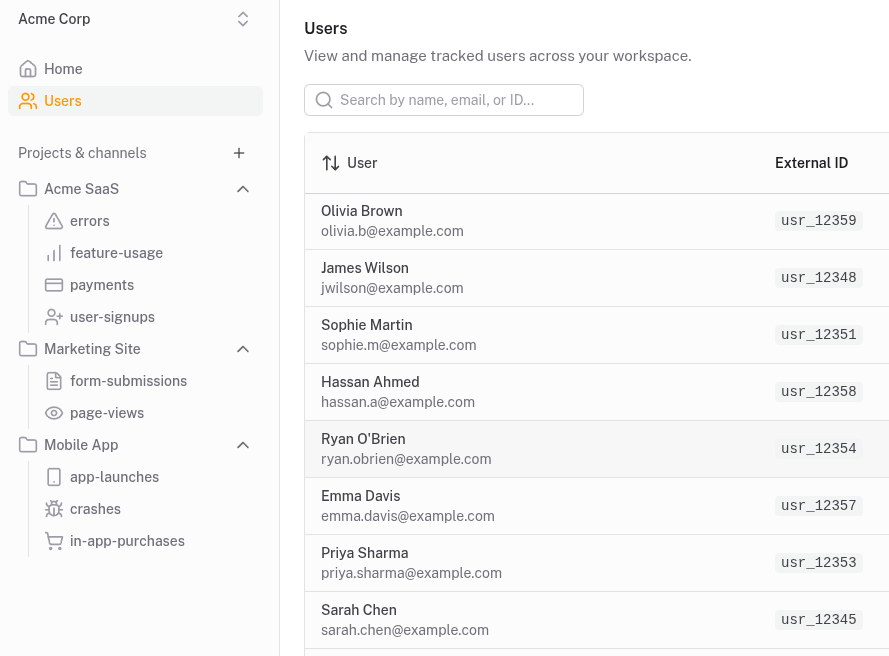
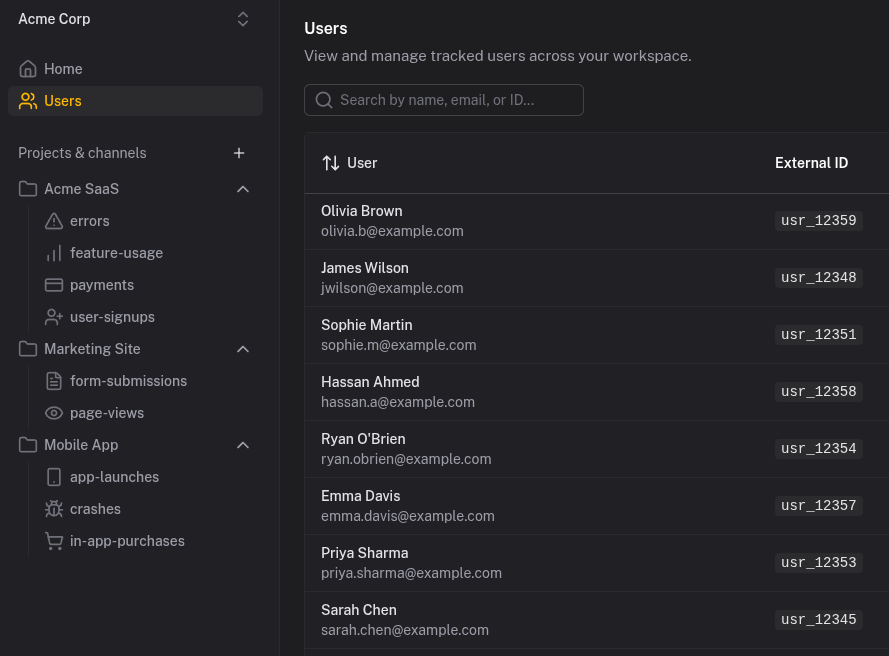
Connect events to real users. See who triggered each event, track activity over time, and understand your users in context.
How it works
Call identify() once when a user signs up or logs in. Pass their ID, name, email, plan, company, or any custom metadata.
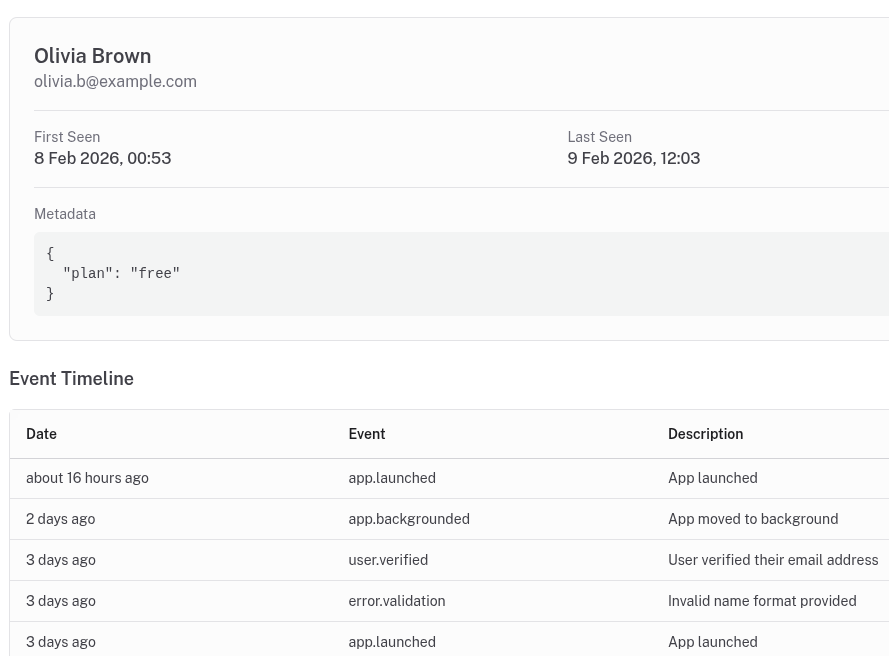
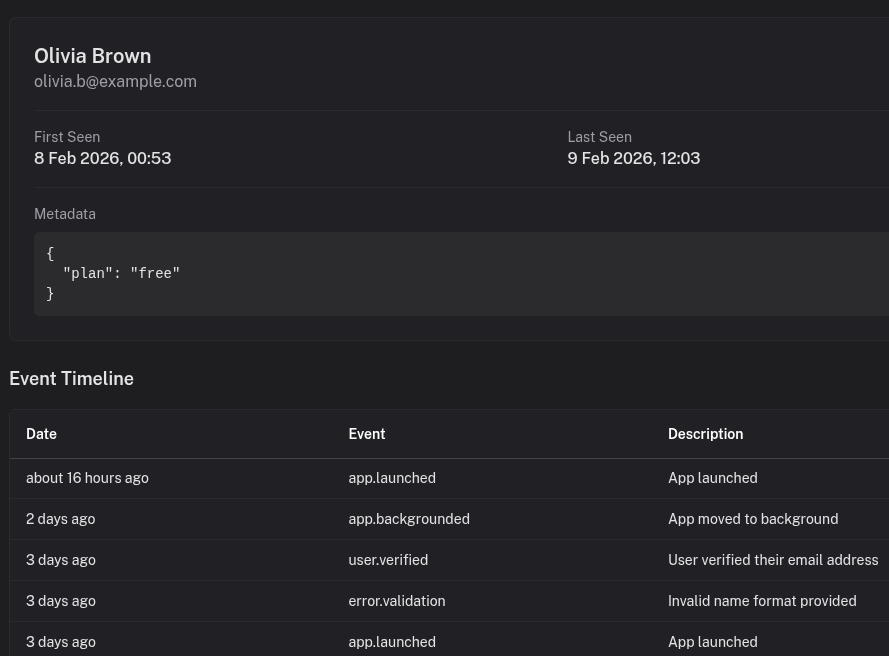
From then on, every event with that user ID is automatically linked to their profile. Click any event to see the full user context: who they are, when they were first seen, last active, and all attached metadata.
Activity is tracked automatically. Each event with a user ID updates their "last seen" timestamp. See who is active today, who signed up this week, and who has gone quiet.
Users are shared across all projects in your workspace. Identify once, and their profile is available everywhere.
Simple to integrate
Identify users with a single API call. Include any metadata that helps you understand them.
await ql.identify({
  userId: "user_123",
  name: "Jane Smith",
  email: "jane@example.com",
  metadata: {
    plan: "pro",
    company: "Acme Inc",
    signupSource: "product-hunt"
  }
})
After identifying, all events with userId: "user_123" are automatically linked to this profile.
What you get
- User profiles with name, email, and custom metadata attached to every event
- Automatic activity tracking with first seen and last seen timestamps
- Click-to-view context showing full user details when you click any event
- User search to find users by name, email, or external ID
- Dashboard stats showing total users, new today, and new this week
- Workspace-scoped so users are shared across all projects
How teams use user profiles
Know who signed up
Click any signup event to see the full user profile: name, email, plan, and where they came from. No database queries needed.
Track user journeys
See complete activity history for any user: signup, feature usage, upgrades. User profiles connect events across all your channels.
Segment by metadata
Store plan type, company size, or any custom field. See at a glance whether an event came from a free trial or your enterprise customer.
User context is the bridge between analytics and action
Teams get more value from saas analytics when behavior is tied to real people, not anonymous counters. User profiles make it possible to inspect timelines, understand account health, and connect product actions to business outcomes.
This is especially useful for product analytics saas teams that work across growth, onboarding, and retention. Instead of asking "how many events happened," you can answer "which users converted, which stalled, and what they did right before that change." That clarity improves experimentation, support, and lifecycle messaging.
Try it out
Connect your users to their activity. See who is behind every event.